
Dorothea? Why this name for our first bicycle?
Dorothea Bate was a palaeontologist, pioneer and ahead of her time. She is believed to have been the first woman to work as a scientist at the Natural History Museum in London, although without an official contract. Later, thanks to her studies and publications, she became the first woman to obtain a professorship at the University of Cambridge in 1937.
In the early 20th century, Dorothea undertook multiple expeditions to explore the Mediterranean in search of fossils. Among many other discoveries, in 1909 she discovered the Myotragus balearicus on the island of Mallorca.
In tribute and admiration of her, we have decided to name our first model Dorothea.
We have designed and tested up to five iterations of the most radical version of the OLS system
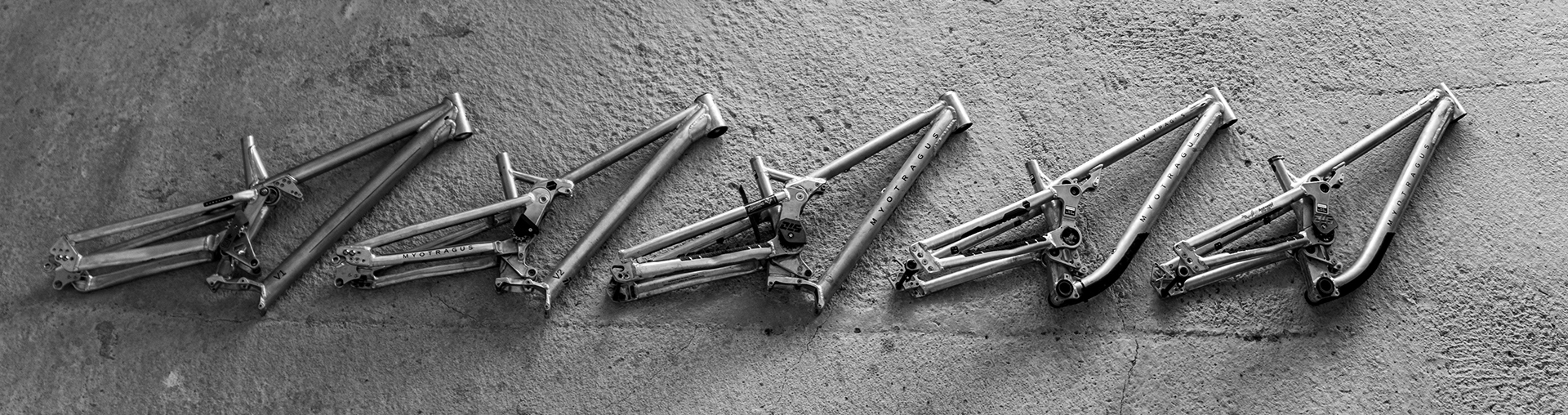
DOROTHEA V1 prototype
2020
Although we first designed and attempted to manufacture other enduro versions, in the end, the first design to become a reality was the downhill version. Downhill is the F1 of MTB, and our favourite discipline, so it made sense for us to start here.
Very happy with the result for our first bike!

It worked well, but some cracks appeared and there was still much room for improvement.
DOROTHEA V2 prototype
2021

In this iteration, in addition to the descent model, we modified the geometry and, with a modular shock absorber mount, we installed a 230x65mm shock absorber to create an Enduro version with 180mm rear travel.
They held up well and the Enduro version climbed very well.

The objectives were: to reduce weight and facilitate manufacturing, assembly and maintenance.

DOROTHEA V5 prototype
2025
This is the version available for purchase at Campmajó Bikes. The result of everything we have learned throughout previous iterations

The rear wheel axle follows a virtually linear trajectory that is tilted backwards. This results in:
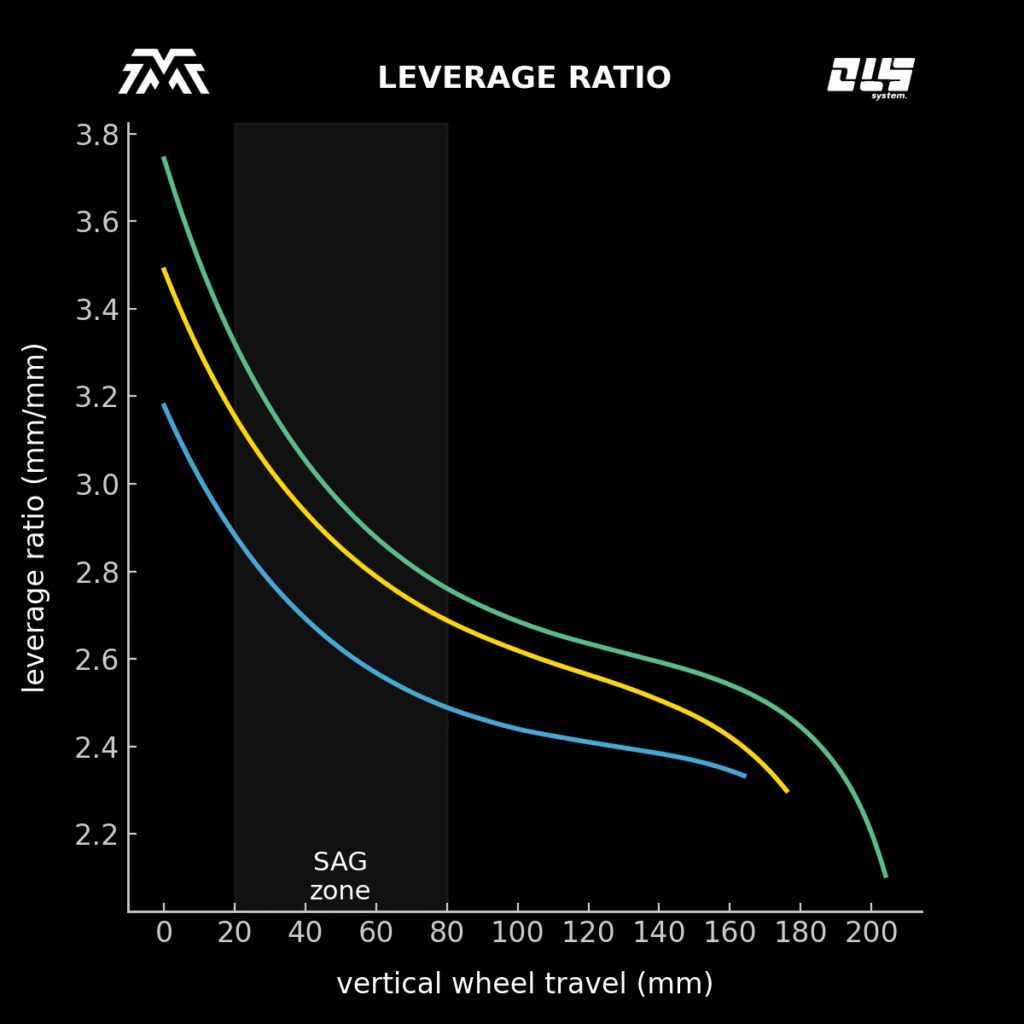
It has been designed with three clearly distinct sections to better adapt to different impact sizes.
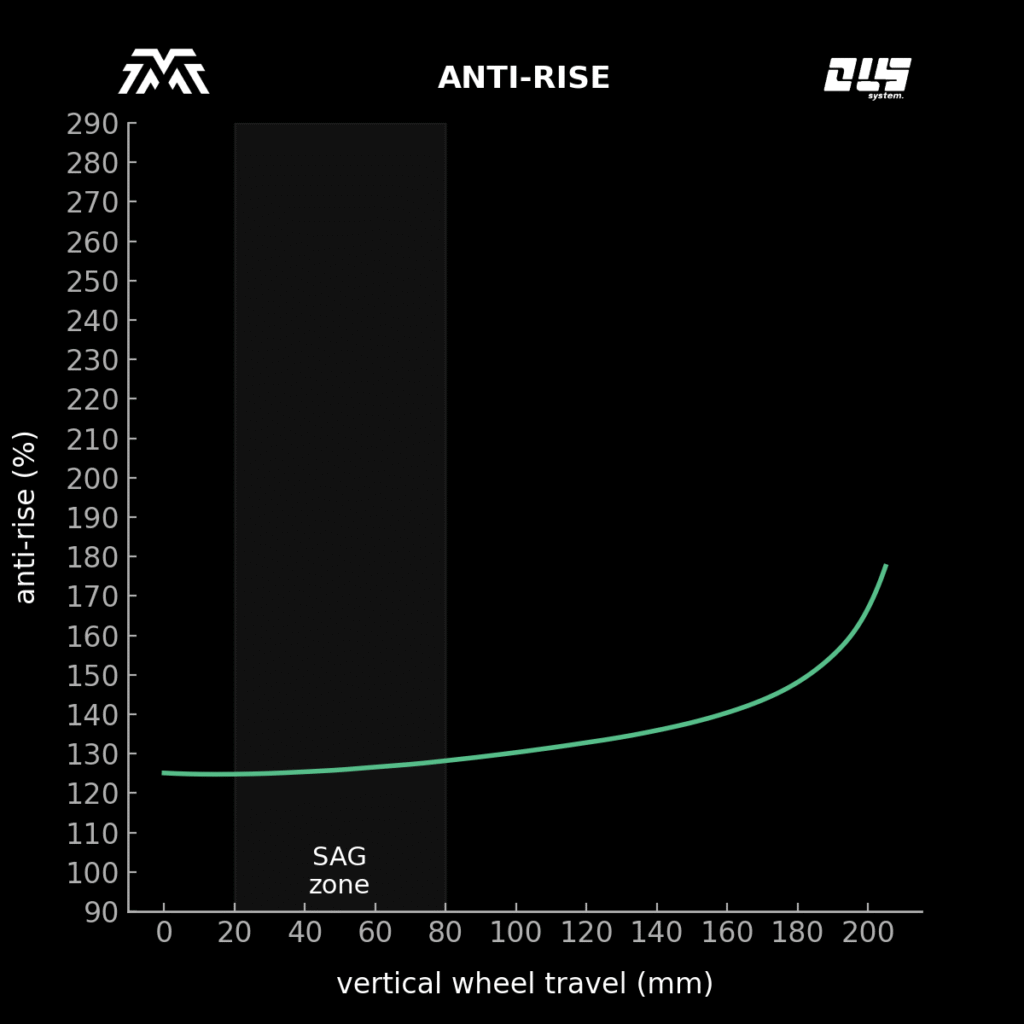
Values above 100% indicate that the suspension will contract, in this case slightly, thus compensating for the compression that inevitably also occurs in the front suspension, maintaining the geometry during braking.
Given that the suspension system has been designed with a less progressive middle section and that the wheel trajectory describes a straight line inclined backwards, we have not noticed that having values above 100% has a significantly negative effect on absorption capacity.
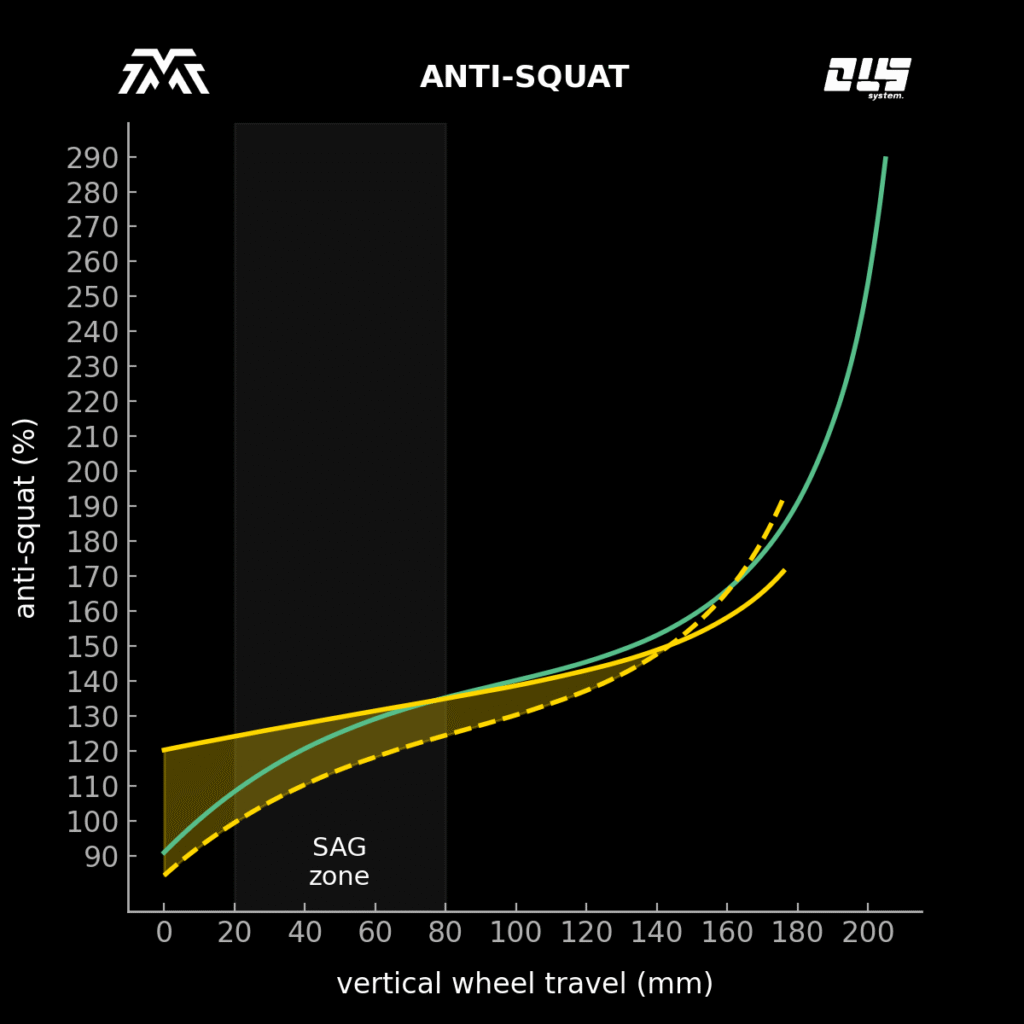
The values increase from start to finish and, from the SAG zone onwards, are slightly above 100%. The aim was to have firm suspension when accelerating while pedalling and maximum stability in all gears.
At the end of the travel they are too high, but we will never be pedalling in that zone.
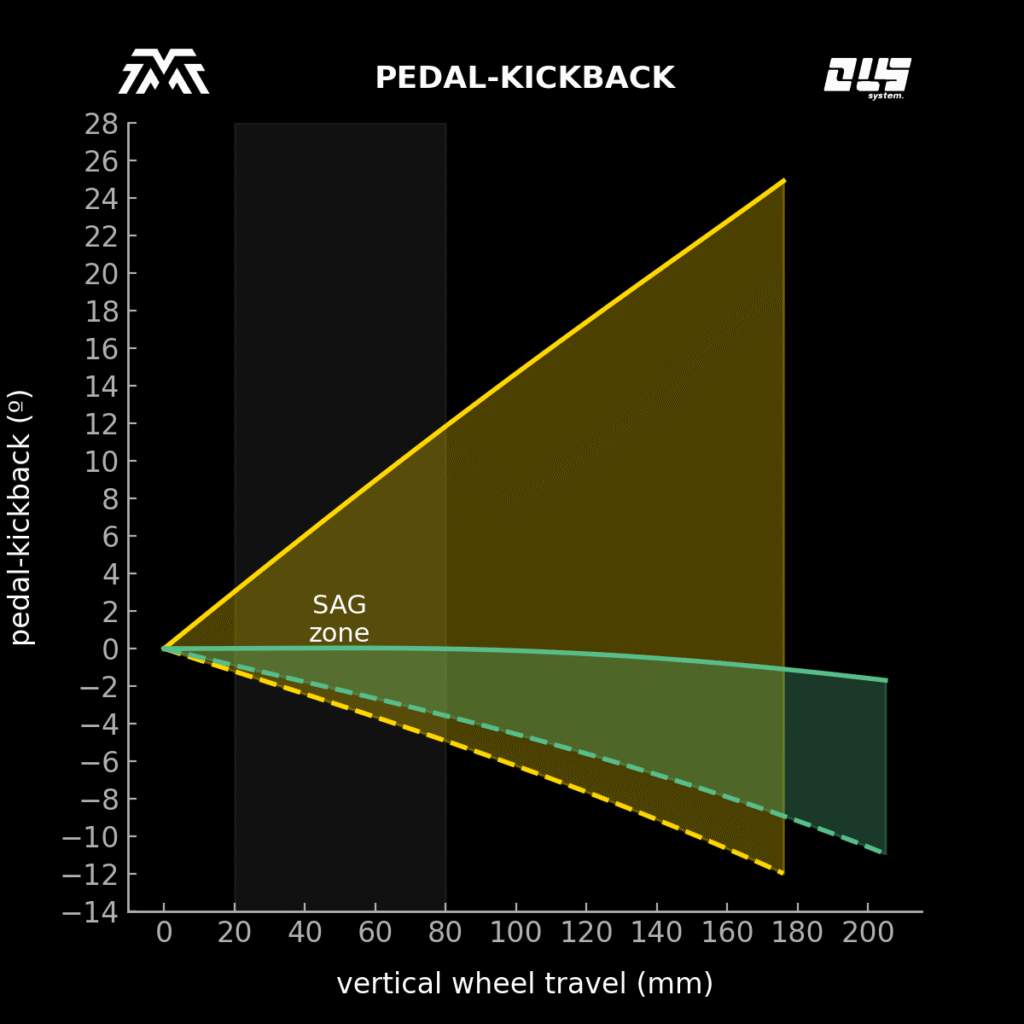
This is a fundamental parameter for comfort when cycling on uneven terrain.
The values in the SAG zone show that the PK is zero with downhill gears and low with high gears. This means that the movement of the suspension will not cause the pedals to kick back significantly.


With the V5 now complete, we began experimenting with other design and manufacturing possibilities while maintaining the essence of Dorothea’s kinematics.

| Galeta | Duración | Descripción |
|---|---|---|
| cookielawinfo-checkbox-analytics | 11 months | This cookie is set by GDPR Cookie Consent plugin. The cookie is used to store the user consent for the cookies in the category "Analytics". |
| cookielawinfo-checkbox-functional | 11 months | The cookie is set by GDPR cookie consent to record the user consent for the cookies in the category "Functional". |
| cookielawinfo-checkbox-necessary | 11 months | This cookie is set by GDPR Cookie Consent plugin. The cookies is used to store the user consent for the cookies in the category "Necessary". |
| cookielawinfo-checkbox-others | 11 months | This cookie is set by GDPR Cookie Consent plugin. The cookie is used to store the user consent for the cookies in the category "Other. |
| cookielawinfo-checkbox-performance | 11 months | This cookie is set by GDPR Cookie Consent plugin. The cookie is used to store the user consent for the cookies in the category "Performance". |
| viewed_cookie_policy | 11 months | The cookie is set by the GDPR Cookie Consent plugin and is used to store whether or not user has consented to the use of cookies. It does not store any personal data. |